
Worth Reading
How to choose an e-cigarette supplier


The industry surrounding e-cigarettes is booming, and the demand for these products is increasing around the world. As such, there are a wide variety of businesses springing up dedicated to selling e-cigarettes and the accessories/juices necessary to make use of them.
However, not all of these businesses are created equal. Some of them are of questionable quality and, because the industry is relatively new, it’s harder for many people to tell the good from the bad.
Whether you are an experienced vaper or someone who is new to the whole thing, you want to engage with the best possible e-cig supplier that you can find. Finding the right supplier means you will be able to enjoy the best customer experience and avoid having a poor experience that leaves you worse off.
To help you when it comes to choosing an e-cigarette, take a look at the following tips.
1. Find an e-vape supplier that is local to you
The best place to start when trying to find an electronic cigarette supplier to engage is with the location. It’s always better to go with a company that is close to you so that you don’t have to wait as long for delivery, and so that they are accountable to your local laws and regulations when it comes to selling e-cigarettes and related products like e-juice.
This is going to be beneficial if and when you run out of juice or need an essential e-cigarette accessory, and you need to source it quickly. Also, if you lose your e-cigarette, or it gets damaged in some way, you will be able to easily get a new one since you have a supplier that is close to you geographically.
You also might be able to save money on delivery costs if it is close enough that you can head there yourself and buy directly from their shelves. This may not always be possible, so it’s worth checking if this is an option if you are going with a supplier who is within a reasonable travel distance to where you live and work.
2. Make sure they have a high-quality website
If you are going to be ordering your products online, then it’s essential that you find an e-ciggy supplier who has a high-quality and easy to use website. You don’t want to engage with a business whose website is clunky and prone to errors, especially if you are going to be spending money through their domain via online payment methods.
A good website should load quickly when you head to it, and you generally shouldn’t have to wait any longer than 2-3 seconds for a page to fully load. Even so, the best websites will load instantly. If you are really eager to browse and purchase a new e-cigarette product, then you don’t want to wait any longer than necessary or tolerate a slow-loading website. There will no doubt be other businesses you can go to who have better-performing sites.
Of course, the website of the e-cigarette supplier needs to be easy for you to navigate so that you have no issues finding what you are looking for. All of their product categories and individual products/packages should be easy for you to filter through to find exactly what you want and not be confused with something else.
They should have at least one image of each product they sell (more images is even better so you can get more of a sense of what you are buying). The images should also be dynamic in that you can mouse over them and zoom in to see even more detail about each product (the best sites often have a way for you to view a product in 3 dimensions, but this is more of a luxury feature).
They should also have robust and unique product descriptions for everything they sell so that you are never left guessing or forced to do your own research. These descriptions should include all the relevant information you need to make a purchase, and they should use a consistent scaling system to tell you the difference between similar products (such as the battery size of different e-cigarettes).
Ideally, each product page will have a space where customers can leave reviews specific to that product. This can help to inform your purchase decisions based on the feedback of other people talking about their experience with a certain product.
The website should also have an FAQ section where it answers common questions about the business, how it operates etc. The e-cig supplier should be totally transparent about where they source or how they manufacture their products, ensuring that they adhere to all relevant regulations.
Naturally, the electronic cigarette supplier’s website should look nice and be pleasant for you to use. A website that looks like it’s stuck in the last decade is not going to be very convenient for you to use and will make you want to visit another website instead.
Lastly, their website should have great security against cyber-attacks so that any information you put into it is not compromised by hackers. Always make sure they have a SSL certification on their domain.
3. Make sure that they are reliable
When you are looking for an e-cigarette supplier to engage, you want to know that they are going to be reliable when it comes to fulfilling orders and have what you need in stock. You don’t want to deal with a company that is inefficient, incompetent, or apathetic in the way it runs its business as you will deal with the consequences of their failures as a customer.
The e-cigarette supplier should have an optimise logistics process to ensure that they have stock and can fulfil orders when you make them. While stock shortages and other issues are known to happen from time to time, this should not be a consistent issue.
After all, when you want to get a new juice flavour or e-cig device shipped to you, you don’t want to deal with any delays that can be avoided. This is why you need to scrutinise the effectiveness of the e-cigarette supplier to make sure that they are reliable as a company.
4. Make sure they are affordable
The e-cigarette supplier you choose to buy products from should have competitively priced products and justify any cost increases on certain items. The lowest price option is not always the best as it can mean a reduction in quality or reliability, but you should not pay more than average if there’s no justification for it.
It’s a good idea to compare the average costs of products across different electronic cigarette suppliers and see if you can find the cheapest option that does not sacrifice on other aspects of the business. The goal is to find the best price for something that meets all of your quality and service expectations.
Affordability is important when you are going to be buying from the same e-cigarette supplier for the foreseeable future. The ongoing costs can really add up, so you want to minimise this as much as possible without compromising on the quality of the product(s) you receive.
5. Check out their reviews
It’s a good idea to check out any reviews you can find posted online about the e-cigarette supplier you are considering engaging with. While all of your investigation up until this point may have resulted in a positive impression of the company, the actual experiences of their customers is something that you really need to pay attention to.
A company that has great products and a great website could easily be let down by poor customer service or some fatal flaw that you can only discover by looking at their feedback. While it’s normal for a company to have a few negative reviews, they should be outweighed by the number of positive reviews they have gotten. If there is a multitude of negative reviews about the e-ciggy supplier, then it is a sign that they may not be the best company that you could go with.
6. Buy something small to start off with
If you really want to assess how good an e-cigarette supplier is, then it’s a good idea to test them out with a small order first. If you like the experience that you had, then you can begin to increase your investment and begin to use them as your main source for electronic cigarette products.
Make a note of how convenient it was for you to use their website to make an order. You should also pay attention to how long it took for the delivery to arrive and what condition the products are in when you get your hands on them.
Conclusion
As you can see, there’s a lot that you can think about when you are choosing an e-cigarette supplier to engage with. All of this research and testing may seem a bit pedantic, but you can never be too careful when it comes to spending your money online.
For decades, property development followed a familiar pattern. An idea emerged, plans were drawn, and consultants worked through the details as the project progressed.
That approach is changing.
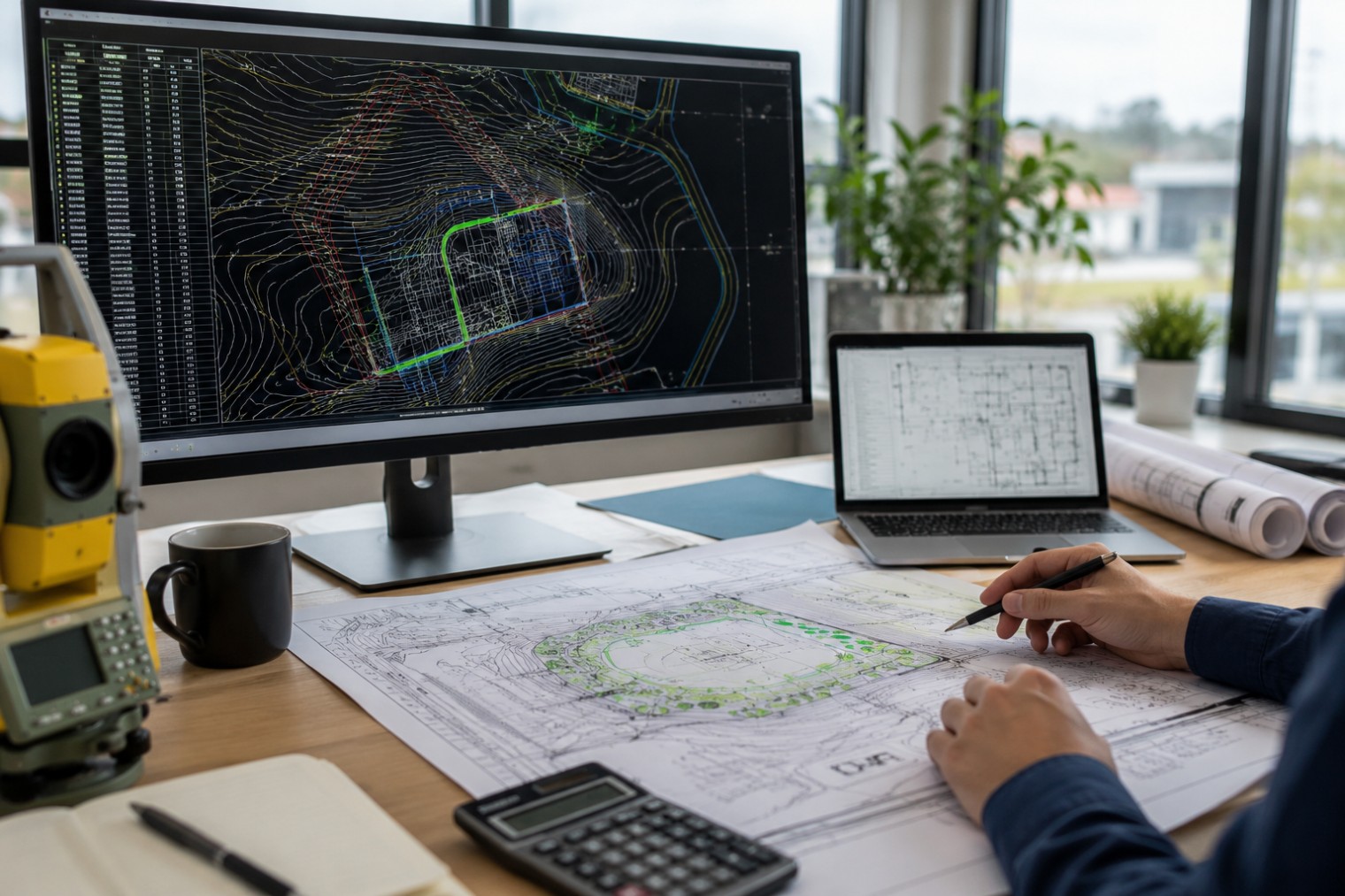
Across the construction and property sectors, a growing number of projects are starting with data rather than design. Before architects develop concepts or builders prepare budgets, developers and property owners are investing more time in understanding the site itself.
The shift reflects a simple reality. Building mistakes have become more expensive.
Construction costs remain elevated, approval requirements have become more detailed, and project delays can quickly affect profitability. As a result, accurate site information is becoming one of the most valuable assets in the early stages of development.
One of the clearest examples of this trend is the growing importance of a detail survey.
These surveys provide a detailed picture of a property’s physical characteristics. They document land levels, slopes, drainage paths, structures, retaining walls, access points, vegetation, utility infrastructure, and other site features that may influence development decisions.
While surveying has always been part of construction, industry professionals say its role is expanding.
Instead of viewing surveys as a technical requirement that occurs after preliminary design work begins, many project teams are now using site data as the starting point for decision-making.
The reason is straightforward. Good information reduces uncertainty.
A block of land can appear simple at first glance while hiding challenges that affect cost, approvals, and construction. Drainage constraints, significant level changes, access limitations, retaining structures, easements, and existing infrastructure may not be obvious during an initial site inspection.
When these issues are discovered late in the process, they often trigger redesigns, approval delays, and construction variations.
When they are identified early, project teams can plan around them.
Architects are among the biggest beneficiaries of this approach.
Rather than designing based on assumptions, they can work from accurate information about site conditions. Building placement, floor levels, access arrangements, outdoor spaces, and drainage strategies can all be developed with greater confidence.
Engineers also rely heavily on accurate site data.
Stormwater management, retaining wall design, road access, earthworks, and structural planning all depend on understanding the physical characteristics of the land. Small errors in levels can have significant consequences once construction begins.
Builders have their own reasons for embracing the trend.
Accurate site information allows contractors to estimate excavation requirements, assess access challenges, and identify potential construction risks before pricing a project. This can improve budget accuracy and reduce the likelihood of unexpected costs emerging later.
Technology is accelerating the shift.
Modern surveying methods allow large amounts of site data to be captured quickly and accurately. Digital terrain models, drone surveys, laser scanning, and advanced mapping systems provide information that can be integrated directly into design software.
As a result, consultants across multiple disciplines can work from the same data source.
This improves coordination and reduces the possibility of conflicting assumptions between project stakeholders.
The trend is also influencing property transactions.
Increasingly, buyers, developers, and investors are seeking detailed site information before making significant commitments. Understanding a property’s development constraints and opportunities before purchase can help avoid costly surprises after settlement.
Some industry observers believe the change reflects a broader evolution within construction.
Historically, many decisions relied heavily on experience, judgement, and assumptions developed over years in the industry. While expertise remains essential, technology now provides access to more detailed information than ever before.
That information allows decisions to be supported by evidence rather than estimates.
The benefits extend beyond financial considerations.
Accurate site data can help improve drainage outcomes, reduce environmental impacts, minimise disputes with neighbouring properties, and support more efficient approval processes.
For property owners, the growing emphasis on data may not always be visible. The finished building often receives the attention, while the work that informed its design remains largely unseen.
Yet industry professionals increasingly view that hidden information as one of the most important components of project success.
Before construction begins, before designs are finalised, and before budgets are locked in, understanding the land has become a priority.
In an industry where mistakes can be costly and delays can affect entire projects, more developers are reaching the same conclusion.
The smartest decisions are often made long before construction starts, and those decisions begin with reliable data.
Leadership
Victoria Kennedy Speaks on Power and Purpose at Anthony Ritossa’s 31st Global Family Office Investment Summit in Miami


Key Takeaways
- Victoria Kennedy joined the WOMAN LED panel at the 31st Global Family Office Investment Summit, sharing the stage with Queen Diambi and HRH May Liu.
- The summit opened with Victoria delivering a live performance of the U.S. National Anthem before more than 300 investors at Trump International Beach Resort in Miami.
- Ritossa is set to host Victoria again at the 32nd Anniversary Edition in Lake Como, Italy, this June, marking another return invitation.
The 31st Global Family Office Investment Summit returned to the Trump International Beach Resort in Miami from May 5 to 7, 2026, drawing more than 300 investors, family office principals, and industry leaders for two days of discussions on capital, governance, and the next decade of family office strategy. The gathering took place days after the Miami Formula 1 Grand Prix, with delegates extending their stay in South Florida for the program.
Among the speakers who took the Ocean Ballroom stage was Victoria Kennedy, CEO of Victorious PR and an award-winning international classical crossover singer, who opened the summit with a live performance of the U.S. National Anthem and later joined the WOMAN LED panel on power, purpose, and the new architecture of influence.
Hosted by Anthony Ritossa under the patronage of H.H. Sheikha Jawaher Bint Khalifa Al Khalifa, the 31st edition marked a decade since the series launched, with programming spanning healthcare and longevity, digital assets, venture capital, real estate tokenization, and co-investment.
Inside the WOMAN-LED Panel
The WOMAN LED panel placed Victoria alongside speakers from distinct fields of influence. Her Majesty Queen Diambi Kabatusuila of the Democratic Republic of Congo brought perspectives on hereditary leadership and African development. HRH May Liu of the Superstar Art Foundation and Royal Family Liu Holdings brought decades of work across film, art, and philanthropy.
Moderated by Katie Hilborn of NextGen Stewardship and Compass Rose International, the conversation focused on how power, capital, and impact are being redefined for a new generation of leaders. Victoria contributed from a public relations perspective, drawing on her work at Victorious PR, where she advises founders and executives on translating authority into media visibility and long-term brand positioning.
The session sat within a wider summit agenda combining keynotes on AI accountability, healthcare and longevity, real estate tokenization, and co-investment opportunities. The WOMAN LED panel drew one of the larger audiences of day one, with delegates from family offices across the Middle East, the United States, Europe, Asia, and Africa gathering to hear how the group sees the next decade of influence taking shape.
Ritossa has built the summit series across multiple continents over the past decade, and the 31st edition reflected its standing as one of the more established forums on the global family office calendar. Victoria has appeared at previous editions, with her continued participation reflecting the summit’s focus on voices grounded in leadership and enterprise.
Speaking Work Beyond the Miami Summit
Victoria’s appearance in Miami is part of a broader speaking portfolio that includes the TEDx stage and the 2026 Davos Communications Summit and Awards in Switzerland, hosted by the World Communications Forum Association.
Her industry engagement includes serving as Master of Ceremonies and host of the Blockchain Expo in Santa Clarita, and as a moderator and speaker at the Summit of Europe in Lake Como, as well as at previous editions of the Ritossa-led Global Family Office Investment Summit series.
Across these forums, her focus has remained on communications strategy and the role of visibility in how founders and executives position themselves within competitive markets. Her appearances combine panel work with thought leadership on how founders use earned media to build credibility, with press coverage framed as a compounding asset rather than a one-off placement.
A Standing Invitation to Lake Como
Across her appearances on the Ritossa stage, Victoria has built a longstanding relationship with the summit series. Ritossa is set to host her again at the 32nd Anniversary Edition, taking place from June 23 to 25, 2026, on the shores of Lake Como in Northern Italy. Positioned as one of Europe’s most influential private wealth gatherings of the year, the summit will continue its focus on AI, private equity, real estate, healthcare, sustainability, hospitality, and fintech.
Lake Como represents the next chapter in a global summit circuit that has already established Dubai and Miami as key gateway cities, with Bahrain announced as a future host location. The Italian edition is expected to convene royal families, sovereign wealth representatives, family offices, and next-generation entrepreneurs from across Europe, the Middle East, Asia, and the Americas.
For Victoria, the invitation reinforces her role within conversations surrounding communications, executive visibility, and influence at the highest levels of business and investment. Her continued participation reflects the summit’s emphasis on leaders operating at the intersection of communications, investment, and executive visibility.
About Victoria Kennedy
Victoria Kennedy is a Wall Street Journal best-selling author, TEDx speaker, and well-respected authority in public relations who has spoken at events for ambassadors, lords, and dignitaries in such prestigious locations as the House of Commons and Guildhall in London and the Vatican. She is the CEO of Victorious PR, an award-winning, multi-million dollar PR agency that has helped dozens of businesses become the #1 Authority in their niche by getting them featured in top podcasts and press. To gain more credibility and authority in your market, please visit victoriouspr.com

Not all moves are the same. A short move across town and a long-distance relocation come with very different challenges. Many people assume the process is similar, just with more miles added. That’s not the case. The planning, cost structure, and level of coordination all change once distance increases.
Pricing Works Differently
Local moves are usually charged by the hour. You pay based on how long the job takes, the number of movers, and sometimes the size of the truck. That means efficiency matters. The faster everything gets packed, loaded, and delivered, the lower the cost.
Long-distance moves are typically priced based on weight, volume, and distance. Instead of hours, you’re paying for space in the truck and how far it needs to travel. Additional services like packing, storage, or special handling can also affect the final price.
Understanding this difference helps you budget properly and avoid surprises.
Planning Timelines Are Not the Same
A local move can often be organized within a few days if needed. Long-distance moves require much more lead time.
You’ll need to coordinate pickup and delivery windows, which may not be on the same day. In some cases, your belongings will share space with other shipments, which can extend delivery times.
Booking early is essential for long-distance moves, especially during peak seasons.
Logistics Get More Complex
With local moves, everything usually happens in one day. The same crew loads, transports, and unloads your items.
Long-distance moves involve more moving parts. There may be different teams handling pickup and delivery. Routes need to be planned carefully, and delays such as weather or traffic can affect timing.
Some moves also involve temporary storage if your new place isn’t ready yet. That adds another layer of coordination.
Packing Standards Are Higher for Long Distance
When your belongings travel longer distances, they face more movement inside the truck. That increases the risk of damage if items aren’t packed properly.
For local moves, basic packing may be enough. For long-distance relocations, stronger boxes, better padding, and more secure wrapping are essential.
Professional movers in Toronto often recommend full or partial packing services for longer moves to reduce risk.
Delivery Expectations Differ
Local moves are straightforward. Your items arrive the same day, and you can start unpacking immediately.
Long-distance moves usually come with a delivery window rather than a fixed time. Depending on distance and logistics, it could take several days or even weeks for your belongings to arrive.
That means you’ll need to plan for essentials separately, including clothing, documents, and daily necessities.
Risk Increases With Distance
The longer your items are in transit, the greater the exposure to potential issues. Road conditions, handling during transfers, and extended travel time all play a role.
That’s why insurance or valuation coverage becomes more important for long-distance moves. It provides an added layer of protection if something goes wrong.
Choosing the Right Moving Company Matters More
For local moves, many companies can handle the job competently. For long-distance relocations, experience becomes critical.
You need a company that understands logistics, communicates clearly, and has a track record of handling longer routes. Delays, poor coordination, or lack of communication can quickly turn into major problems.
Check reviews, ask questions, and make sure everything is clearly outlined in the agreement.
Local and long-distance moves may seem similar on the surface, but they require very different approaches. A short move focuses on speed and efficiency. A long-distance move demands planning, coordination, and stronger protection for your belongings.
Knowing these differences helps you prepare properly and avoid costly mistakes. With the right approach and the right movers, both types of moves can be handled smoothly from start to finish.


Gordon Ramsay and his fitness routine as a celebrity chef

The leadership traits and skills of Bill Gates

How acclaimed singer Adele lost so much weight

Zac Efron’s daily routine for his Baywatch body
The leadership traits and skills of Bill Gates

How does nutrition affect exercise with a celebrity example
-
 Lifestyle6 days ago
Zac Efron’s daily routine for his Baywatch body
-
 Leadership2 days ago
The leadership traits and skills of Bill Gates
-
 Food & Cooking1 week ago
How does nutrition affect exercise with a celebrity example
-
 Lifestyle2 days ago
Gordon Ramsay and his fitness routine as a celebrity chef
-

 Lifestyle6 years ago
Debut album by Amalia Kadis delights her eager and rapidly growing fanbase
-

 Leadership1 week ago
The unique leadership style of Jeff Bezos
-

 Leadership4 days ago
The key factors of Mark Zuckerberg’s journey to leadership
-

 Food & Cooking3 days ago
How Gordon Ramsay became a successful chef